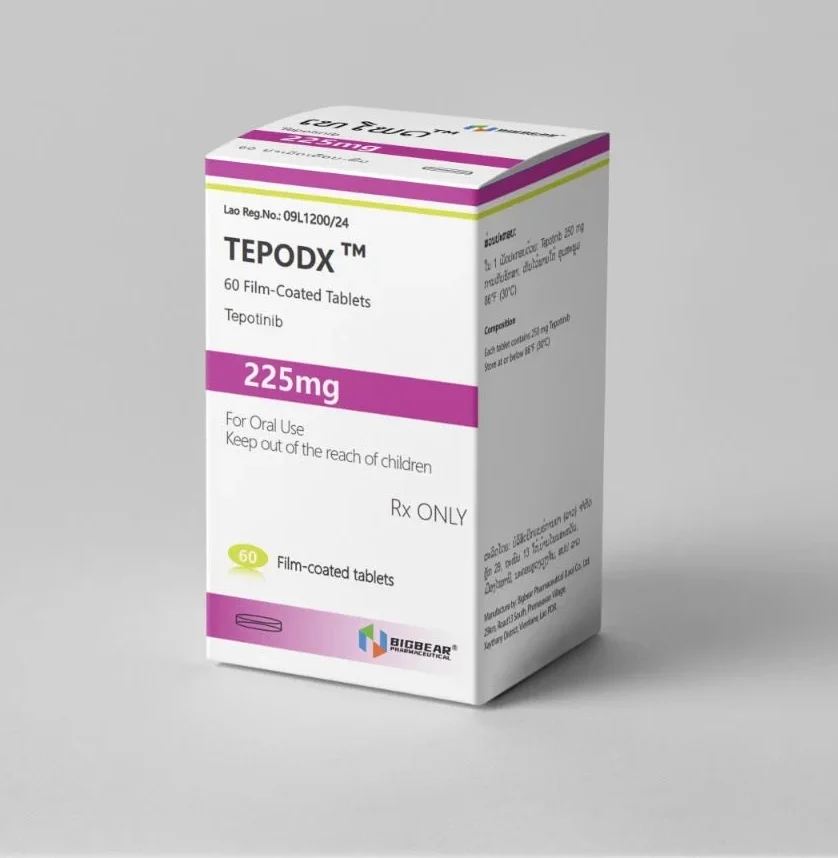
.webp "老挝大熊 bigbear tepodx 特泊替尼 tepotinib")
Product Information
-
Generic Name: Tepotinib
-
Brand Name: TEPODX
-
English Name: Tepotinib
Pharmacology and Mechanism Tepotinib is a mesenchymal-epithelial transition (MET) factor receptor inhibitor. It blocks the proliferation and migration of tumor cells by inhibiting MET kinase activity. It specifically targets non-small cell lung cancer (NSCLC) patients who are positive for MET exon 14 (METex14) skipping alterations.
Indications
-
Advanced or Metastatic Non-Small Cell Lung Cancer (NSCLC): Indicated for adult patients with confirmed MET exon 14 skipping alterations.
-
Patient Population: Suitable for patients who have no alternative treatment options or who have progressed after standard therapy.
Dosage and Administration
-
Recommended Dosage: 450 mg (two 225 mg tablets) administered orally once daily.
-
Administration: Take with food to optimize drug absorption.
-
Missed Dose: If a dose is missed, take it as soon as possible within 24 hours. If more than 24 hours have passed, skip the missed dose.
Contraindications
-
Contraindicated in patients with a known hypersensitivity to tepotinib or any of its ingredients.
Precautions and Warnings
-
Hepatotoxicity: Tepotinib may cause abnormal liver function. Monitor liver function tests (ALT, AST, bilirubin, etc.) prior to and periodically during treatment.
-
Pulmonary Toxicity: Interstitial Lung Disease (ILD) or pneumonitis can occur. Withhold treatment and evaluate if respiratory symptoms (e.g., cough, dyspnea) develop.
-
Embryo-Fetal Toxicity: Tepotinib can cause fetal harm. Females of reproductive potential should use effective contraception during treatment and for at least 1 week after the final dose.
-
Renal Impairment: Use with caution in patients with moderate to severe renal impairment due to limited clinical experience.
Adverse Reactions
-
Common Reactions: Peripheral edema, nausea, diarrhea, fatigue, hypoalbuminemia, and stomatitis.
-
Serious Reactions: Hepatic impairment, ILD/pneumonitis, and abnormal heart rhythm.
Drug Interactions
-
CYP3A4 Inducers/Inhibitors: Tepotinib metabolism is regulated by CYP3A4 and P-gp. Strong inducers (e.g., rifampin) may decrease plasma concentrations, while strong inhibitors (e.g., ketoconazole) may increase them.
-
Other Medications: Avoid co-administration with drugs that have potential interactions; consult a healthcare provider for specific guidance.
Overdose
-
Symptoms: May lead to exacerbated adverse reactions.
-
Management: There is no specific antidote. Discontinue the medication immediately and provide symptomatic supportive care.
Reviews
There are no reviews yet.