Product Details
Product Information
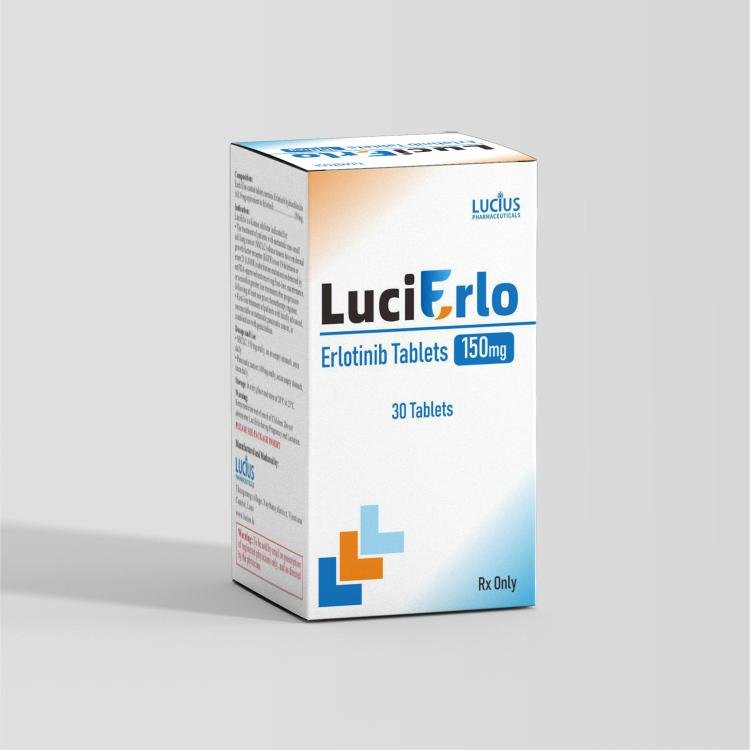
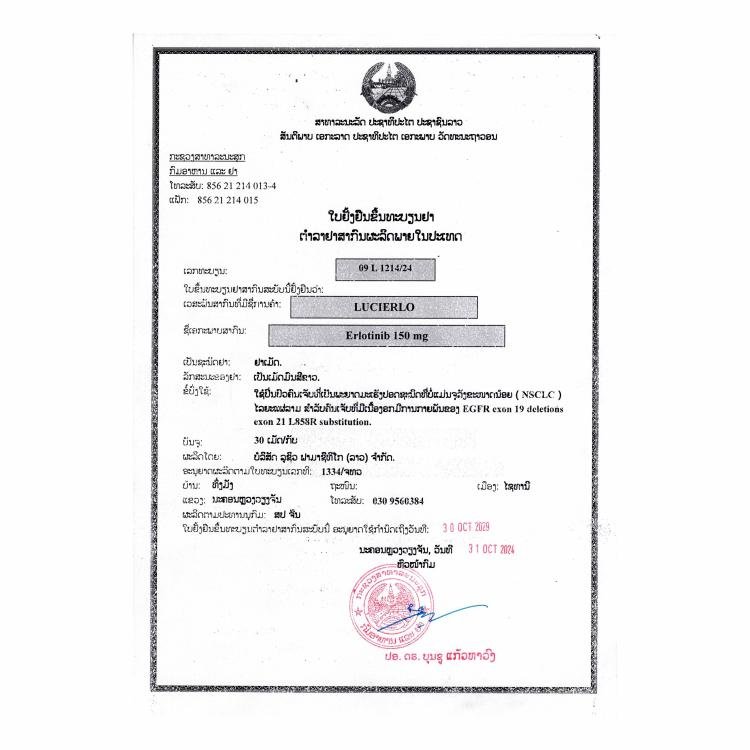
- Product name: LuciErlo Erlotinib150mg Erlotinib 150mg
- Manufacturer / brand: Laos Lucius Pharma
- Active ingredient: Erlotinib
- Current strength: 150mg
- SKU: LU-ITEM-57
- Site category: first-generation EGFR-TKI, other cancer
Product Summary
LuciErlo Erlotinib150mg Erlotinib 150mg is an AISTIKA-listed product supplied by Laos Lucius Pharma. This page summarizes the product identity, strength, SKU, site category, and public medical reference information. Product name, manufacturer, packaging, and strength follow this AISTIKA product page.
Active Ingredient and Reference Data
Erlotinib is the active ingredient used for this product page. Public prescribing information for Erlotinib was used for the medical reference sections. Medical details are provided for reference and must be interpreted by a qualified healthcare professional.
Mechanism of Action
Epidermal growth factor receptor (EGFR) is expressed on the cell surface of both normal and cancer cells. Erlotinib reversibly inhibits the kinase activity of EGFR, preventing autophosphorylation of tyrosine residues associated with the receptor and thereby inhibiting further downstream signaling. Erlotinib binding affinity for EGFR exon 19 deletion or exon 21 (L858R) mutations is higher than its affinity for the wild type receptor. Erlotinib inhibition of other tyrosine kinase receptors has not been fully characterized.
Reference Indications
Erlotinib tablet is a kinase inhibitor indicated for: The treatment of patients with metastatic non-small cell lung cancer (NSCLC) whose tumors have epidermal growth factor receptor (EGFR) exon 19 deletions or exon 21 (L858R) substitution mutations as detected by an FDA-approved test receiving first-line, maintenance, or second or greater line treatment after progression following at least one prior chemotherapy regimen First-line treatment of patients with locally advanced, unrespectable or metastatic pancreatic cancer, in combination with gemcitabine. Limitations of Use: Safety and efficacy of Erlotinib tablets have not been established in patients with NSCLC whose tumors have other EGFR mutations. Erlotinib tablets are not recommended for use in combination with platinum-based chemotherapy.
Reference Dosage and Administration
Recommended Dose – NSCLC The recommended daily dose of Erlotinib tablets for NSCLC is 150 mg taken on an empty stomach, i.
With this 150mg product, that corresponds to 1 x 150mg tablet when that reference dose is clinically appropriate.
This reference dosage is not an individualized prescription. Dose changes, treatment interruptions, or discontinuation must be directed by a physician.
Important Safety Information
Interstitial lung disease (ILD) : Occurs in 1.1% of patients. Withhold Erlotinib tablets for acute onset of new or progressive unexplained pulmonary symptoms, such as dyspnea, cough and fever. Discontinue Erlotinib if ILD is diagnosed. Renal failure : Monitor renal function and electrolytes, particularly in patients at risk of dehydration. Withhold Erlotinib tablets for severe renal toxicity. Hepatotoxicity : Occurs with or without hepatic impairment, including hepatic failure and hepatorenal syndrome: Monitor periodic liver testing. Withhold or discontinue Erlotinib tablets for severe or worsening liver tests. Gastrointestinal perforations : Discontinue Erlotinib tablets. Bullous and exfoliative skin disorders : Discontinue Erlotinib tablets.
Common Adverse Reactions and Monitoring
The incidences of rash and diarrhea from clinical studies of Erlotinib tablet for the treatment of NSCLC and pancreatic cancer were 70% for rash and 42% for diarrhea. The most frequent Grade 3- in Erlotinib tablets-treated patients were rash and diarrhea. The median duration of Erlotinib tablets treatment was 9.6 months in Study 1. ‡ Rash as a composite term includes rash, acne, folliculitis, erythema, acneiform dermatitis, dermatitis, palmarplantar erythrodysesthesia syndrome, exfoliative rash, erythematous rash, rash pruritic, skin toxicity, eczema, follicular rash, skin ulcer.
Drug Interactions and Special Populations
CYP3A4 Inhibitors Co-administration of Erlotinib tablets with a strong CYP3A4 inhibitor or a combined CYP3A4 and CYP1A2 inhibitor increased Erlotinib exposure. Erlotinib is metabolized primarily by CYP3A4 and to a lesser extent by CYP1A2. Increased Erlotinib exposure may increase the risk of exposure-related toxicity . Avoid co-administering Erlotinib tablets with strong CYP3A4 inhibitors (e.g., boceprevir, clarithromycin, conivaptan, indinavir, itraconazole, ketoconazole, lopinavir/ritonavir, nefazodone, nelfinavir, posaconazole, ritonavir, saquinavir, telithromycin, voriconazole, grapefruit or grapefruit juice) or a combined CYP3A4 and CYP1A2 inhibitor (e.g., ciprofloxacin).
Storage and Purchase Notes
Store according to the package or pharmacist instructions and keep out of reach of children. Before ordering, confirm product name, strength, quantity, price, shipping details, and payment method. After receipt, check packaging, batch number, expiration date, and storage conditions.
Sources
Sources: Erlotinib public prescribing information; openFDA/DailyMed public label data. These sources are used for public medical reference. Product information follows this AISTIKA product page.
DisclaimerProduct details, availability, pricing, and checkout information can change. Please review this product page carefully and consult a qualified healthcare professional before using any medicine.
Reviews
There are no reviews yet.