
Product Details
Product Information
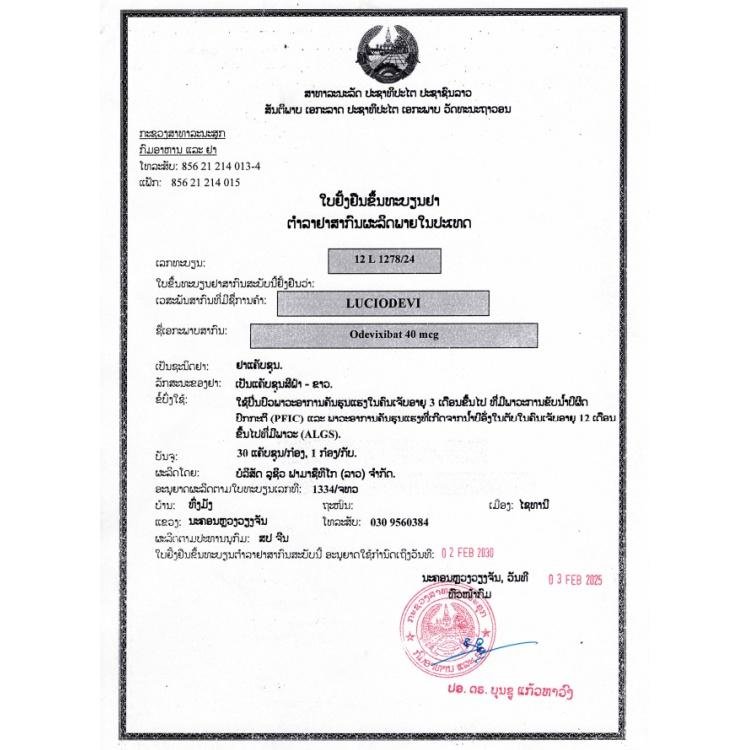
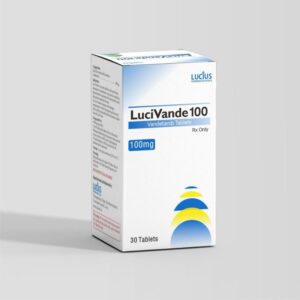
- Product name: LuciOdevi Odevixibat 400mg
- Manufacturer / brand: Laos Lucius Pharma
- Active ingredient: Odevixibat
- Current strength: 400mg
- SKU: LU-ITEM-81
- Site category: other cancer
Product Summary
LuciOdevi Odevixibat 400mg is an AISTIKA-listed product supplied by Laos Lucius Pharma. This page summarizes the product identity, strength, SKU, site category, and public medical reference information. Product name, manufacturer, packaging, and strength follow this AISTIKA product page.
Active Ingredient and Reference Data
Odevixibat is the active ingredient used for this product page. Public prescribing information for Odevixibat was used for the medical reference sections. Medical details are provided for reference and must be interpreted by a qualified healthcare professional.
Mechanism of Action
Odevixibat is a reversible inhibitor of the ileal bile acid transporter (IBAT). It decreases the reabsorption of bile acids (primarily the salt forms) from the terminal ileum . Pruritus is a common symptom in patients with PFIC and ALGS; the pathophysiology of pruritus in patients with PFIC is not completely understood. Although the complete mechanism by which odevixibat improves pruritus in both PFIC and ALGS patients is unknown, it may involve inhibition of the IBAT, which results in decreased reuptake of bile salts, as observed by a decrease in serum bile acids .
Reference Indications
Odevixibat is an ileal bile acid transporter (IBAT) inhibitor indicated for: Progressive Familial Intrahepatic Cholestasis (PFIC) the treatment of pruritus in patients 3 months of age and older with progressive familial intrahepatic cholestasis (PFIC). Limitation of Use : Odevixibat is not recommended in a subgroup of PFIC type 2 patients with specific ABCB11 variants resulting in non-functional or complete absence of the bile salt export pump protein. ( 12.5 , 14.1 ) Alagille Syndrome (ALGS) the treatment of cholestatic pruritus in patients 12 months of age and older with Alagille syndrome (ALGS). Limitations of Use Odevixibat is not recommended in a subgroup of PFIC type 2 patients with specific ABCB11 variants resulting in non-functional or complete absence of the bile salt export pump (BSEP) protein .
Reference Dosage and Administration
Recommended dosage of Odevixibat is 40 mcg/kg taken orally once daily in the morning with a meal. taken orally once daily.
Dose conversion must be confirmed by a physician because the reference dose may vary by indication, organ function, toxicity, or interacting medicines.
This reference dosage is not an individualized prescription. Dose changes, treatment interruptions, or discontinuation must be directed by a physician.
Important Safety Information
Hepatoxicity : Obtain baseline liver tests and monitor patients frequently for the first 6 to 8 months after starting therapy, and as clinically indicated thereafter during treatment. If liver test abnormalities or signs of clinical hepatitis occur, consider dose reduction or treatment interruption. Monitor patients with compensated cirrhosis or portal hypertension more frequently. Permanently discontinue Odevixibat if hepatic decompensation occurs. ( 2.3 , 5.1 ) Diarrhea : Treat dehydration. Treatment interruption or discontinuation may be required for persistent diarrhea. Fat-Soluble Vitamin (FSV) Deficiency : Obtain baseline levels and monitor during treatment. Supplement with FSV if deficiency is observed. If FSV deficiency persists or worsens despite FSV supplementation, consider discontinuing Odevixibat treatment.
Common Adverse Reactions and Monitoring
PFIC Clinical Studies Trial 1 is a randomized, double-blind, placebo-controlled, 24-week study of two dose levels of Odevixibat (40 mcg/kg and 120 mcg/kg) administered once daily . Sixty-two patients were randomized (1:1:1) to receive one of the following: Odevixibat 40 mcg/kg/day (n=23), Odevixibat 120 mcg/kg/day (n=19), or Placebo (n=20). Odevixibat 40 or 120 mcg/kg/day was administered once daily for 72 weeks, with the option to continue treatment beyond 72 weeks. However, fractures were reported in a total of 6 patients (5%) in Trial 2.
Drug Interactions and Special Populations
Bile acid binding resins may bind odevixibat in the gut, which may reduce Odevixibat efficacy. Pregnancy: Based on animal data, may cause cardiac malformations 8.1 Pregnancy Risk Summary Limited human data on the use of Odevixibat in pregnant women are insufficient to establish a drug-associated risk of major birth defects, miscarriage, or adverse developmental outcomes. Based on findings from animal reproduction studies, Odevixibat may cause cardiac malformations when a fetus is exposed during pregnancy. Odevixibat may inhibit the absorption of fat-soluble vitamins. FSV are essential for normal fetal growth and development. Monitor pregnant patients for FSV deficiency and supplement as needed. Increased supplementation of FSVs may be needed during pregnancy .
Storage and Purchase Notes
Store according to the package or pharmacist instructions and keep out of reach of children. Before ordering, confirm product name, strength, quantity, price, shipping details, and payment method. After receipt, check packaging, batch number, expiration date, and storage conditions.
Sources
Sources: Bylvay public prescribing information; openFDA/DailyMed public label data. These sources are used for public medical reference. Product information follows this AISTIKA product page.
DisclaimerProduct details, availability, pricing, and checkout information can change. Please review this product page carefully and consult a qualified healthcare professional before using any medicine.
Reviews
There are no reviews yet.