Product Details
Product Information
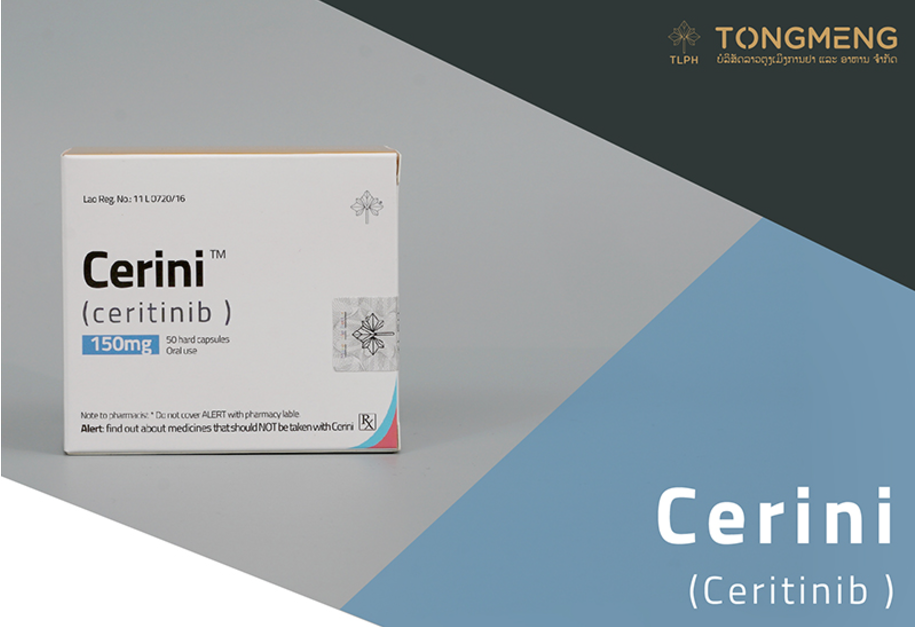
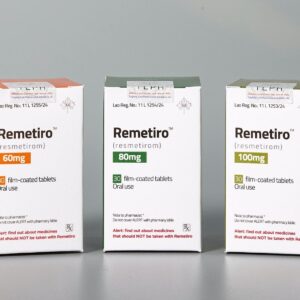
- Product name: Cerini Ceritinib as shown on package
- Manufacturer / brand: Laos TLPH Pharma
- Active ingredient: Ceritinib
- Current strength: as shown on package
- SKU: AM-ITEM-25
- Site category: ALK target, general medicines
Product Summary
Cerini Ceritinib as shown on package is an AISTIKA-listed product supplied by Laos TLPH Pharma. This page summarizes the product identity, strength, SKU, site category, and public medical reference information. Product name, manufacturer, packaging, and strength follow this AISTIKA product page.
Active Ingredient and Reference Data
Ceritinib is the active ingredient used for this product page. Public prescribing information for Ceritinib was used for the medical reference sections. Medical details are provided for reference and must be interpreted by a qualified healthcare professional.
Mechanism of Action
Ceritinib is a kinase inhibitor. Targets of ceritinib inhibition identified in either biochemical or cellular assays at clinically relevant concentrations include ALK, insulin-like growth factor 1 receptor (IGF-1R), insulin receptor (InsR), and ROS1. Among these, ceritinib is most active against ALK. Ceritinib inhibited autophosphorylation of ALK, ALK-mediated phosphorylation of the downstream signaling protein STAT3, and proliferation of ALK-dependent cancer cells in in vitro and in vivo assays.
Reference Indications
Ceritinib ® is indicated for the treatment of adult patients with metastatic non-small cell lung cancer (NSCLC) whose tumors are anaplastic lymphoma kinase (ALK)-positive as detected by an FDA-approved test . Ceritinib is a kinase inhibitor indicated for the treatment of adults with metastatic non-small cell lung cancer (NSCLC) whose tumors are anaplastic lymphoma kinase (ALK)-positive as detected by an FDA-approved test.
Reference Dosage and Administration
Recommended Dosage: 450 mg orally once daily with food. administer an additional dose and continue with the next scheduled dose of Ceritinib.
Dose conversion must be confirmed by a physician because the reference dose may vary by indication, organ function, toxicity, or interacting medicines.
This reference dosage is not an individualized prescription. Dose changes, treatment interruptions, or discontinuation must be directed by a physician.
Important Safety Information
If severe or intolerable, withhold if not responsive to antiemetics or antidiarrheals; upon improvement, resume Ceritinib at a reduced dose. ( 2.3 , 5.1 ) Hepatotoxicity : Ceritinib can cause hepatotoxicity. Monitor liver laboratory tests at least monthly. Withhold then dose reduce, or permanently discontinue Ceritinib. ( 2.3 , 5.2 ) Interstitial Lung Disease/Pneumonitis : Occurred in 2.4% of patients. Permanently discontinue Ceritinib in patients diagnosed with treatment-related interstitial lung disease (ILD)/pneumonitis. ( 2.3 , 5.3 ) QT Interval Prolongation : Ceritinib can cause QTc interval prolongation. Monitor electrocardiograms and electrolytes in patients with congestive heart failure, bradyarrhythmias, electrolyte abnormalities, or those who are taking medications that are known to prolong the QTc interval.
Common Adverse Reactions and Monitoring
The majority of patients enrolled in these studies had received prior treatment with chemotherapy and/or crizotinib for NSCLC. Approximately 45% of patients initiating treatment with Ceritinib 750 mg under fasted conditions had an adverse reaction that required at least one dose reduction and 66% of patients had an adverse reaction that required at least one dose interruption. The median time to first dose reduction due to any reason was 7 weeks.
Drug Interactions and Special Populations
CYP3A Inhibitors and Inducers : Avoid concurrent use of Ceritinib with strong CYP3A inhibitors or inducers. If concurrent use of a strong CYP3A inhibitor is unavoidable, dose reduce Ceritinib. ( 2.4 , 7.1 ) CYP3A Substrates : Avoid coadministration of Ceritinib with sensitive CYP3A substrates. CYP2C9 Substrates : Avoid coadministration of Ceritinib with CYP2C9 substrates for which minimal concentration changes may lead to serious toxicities. Avoid concurrent use of strong CYP3A inhibitors during treatment with Ceritinib. If concurrent use of strong CYP3A inhibitors is unavoidable, reduce the Ceritinib dose . Do not consume grapefruit and grapefruit juice as they may inhibit CYP3A. Strong CYP3A Inducers A strong CYP3A4/P-gp inducer (rifampin) decreased the systemic exposure of ceritinib , which may decrease the efficacy of Ceritinib.
Storage and Purchase Notes
Store according to the package or pharmacist instructions and keep out of reach of children. Before ordering, confirm product name, strength, quantity, price, shipping details, and payment method. After receipt, check packaging, batch number, expiration date, and storage conditions.
Sources
Sources: ZYKADIA public prescribing information; openFDA/DailyMed public label data. These sources are used for public medical reference. Product information follows this AISTIKA product page.
DisclaimerProduct details, availability, pricing, and checkout information can change. Please review this product page carefully and consult a qualified healthcare professional before using any medicine.
Reviews
There are no reviews yet.