Product Details
Product Information
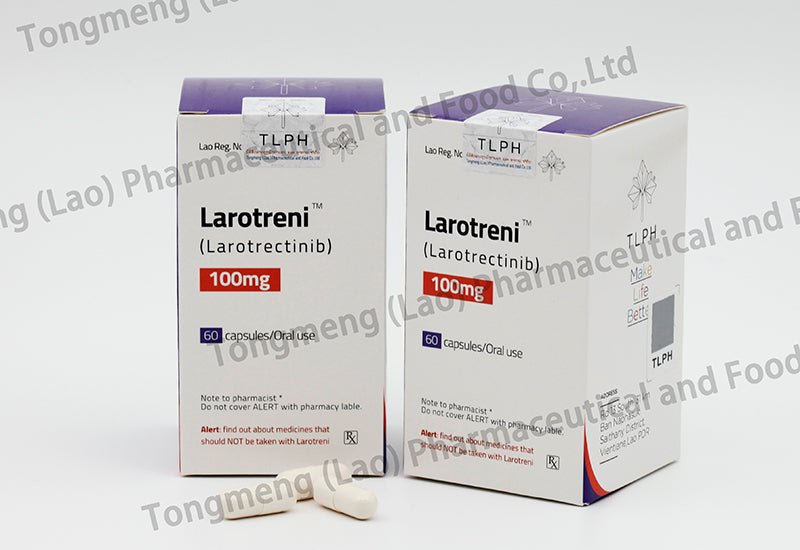
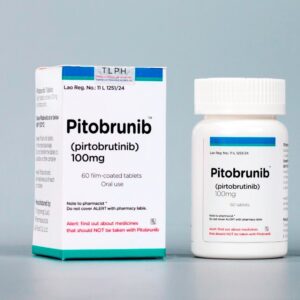
- Product name: Larotreni Larotrectinib 100mg
- Manufacturer / brand: Laos TLPH Pharma
- Active ingredient: Larotrectinib
- Current strength: 100mg
- SKU: AM-ITEM-37
- Site category: broad-spectrum anticancer drugs, general medicines, NTRK target
Product Summary
Larotreni Larotrectinib 100mg is an AISTIKA-listed product supplied by Laos TLPH Pharma. This page summarizes the product identity, strength, SKU, site category, and public medical reference information. Product name, manufacturer, packaging, and strength follow this AISTIKA product page.
Active Ingredient and Reference Data
Larotrectinib is the active ingredient used for this product page. Public prescribing information for Larotrectinib was used for the medical reference sections. Medical details are provided for reference and must be interpreted by a qualified healthcare professional.
Mechanism of Action
Larotrectinib is an inhibitor of the tropomyosin receptor kinases (TRK), TRKA, TRKB, and TRKC. One other kinase TNK2 was inhibited at approximately 100-fold higher concentration. TRKA, B, and C are encoded by the genes NTRK1, NTRK2, and NTRK3. Chromosomal rearrangements involving in-frame fusions of these genes with various partners can result in constitutively-activated chimeric TRK fusion proteins that can act as an oncogenic driver, promoting cell proliferation and survival in tumor cell lines.
Reference Indications
Larotrectinib is indicated for the treatment of adult and pediatric patients with solid tumors that: have a neurotrophic receptor tyrosine kinase ( NTRK ) gene fusion without a known acquired resistance mutation, are metastatic or where surgical resection is likely to result in severe morbidity, and have no satisfactory alternative treatments or that have progressed following treatment. Select patients for therapy based on an FDA-approved test .
Reference Dosage and Administration
Recommended Dosage in Adult and Pediatric Patients with Body Surface Area of 1 Meter-Squared or greater: 100 mg orally twice daily Recommended Dosage in Pediatric Patients with Body Surface Area of Less Than 1 Meter-Squared: 100 mg/m 2 orally twice daily Select patients for treatment with Larotrectinib based on the presence of a NTRK gene fusion in tumor specimens . with or without food, until disease progression or until unacceptable toxicity.
With this 100mg product, that corresponds to 1 x 100mg tablet when that reference dose is clinically appropriate.
This reference dosage is not an individualized prescription. Dose changes, treatment interruptions, or discontinuation must be directed by a physician.
Important Safety Information
Advise patients not to drive or operate hazardous machinery if experiencing neurotoxicity. Withhold and modify dosage, or permanently discontinue Larotrectinib based on severity. ( 2.3 , 5.1 ) Skeletal Fractures: Promptly evaluate patients with signs or symptoms of fractures. Hepatotoxicity: Obtain liver function tests (ALT, AST, ALP and bilirubin) before initiation of Larotrectinib and every 2 weeks during the first 2 months of treatment, then monthly thereafter or as clinically indicated. Temporarily withhold, reduce dose, or permanently discontinue Larotrectinib based on severity. ( 2.4 , 5.3 ) Embryo-Fetal Toxicity: Can cause fetal harm. Advise females with reproductive potential of potential risk to the fetus and to use effective contraception. Cognitive impairment occurred in 11% of patients.
Common Adverse Reactions and Monitoring
Larotrectinib was studied in one adult dose-finding trial [LOXO-TRK-14001 (n = 75)], one pediatric dose-finding trial [SCOUT (n = 154)], and one single arm trial [NAVIGATE (n = 215)]. All patients had an unresectable or metastatic solid tumor and no satisfactory alternative treatment options or disease progression following treatment. Across these 444 patients, the median age was 44 years (range: 18 days to 90 years); 35% were younger than 18 years; 53% were female; 59% were White, 24% were Asian and, 4% were Black; and 7% were Hispanic/Latino.
Drug Interactions and Special Populations
Strong CYP3A4 Inhibitors: Avoid coadministration of strong CYP3A4 inhibitors with Larotrectinib. If coadministration cannot be avoided, reduce the Larotrectinib dose. Strong CYP3A4 Inducers: Avoid coadministration of strong CYP3A4 inducers with Larotrectinib. If coadministration cannot be avoided, increase the Larotrectinib dose. ( 2.6 , 7.1 ) Moderate CYP3A4 Inducers: Increase the Larotrectinib dose. ( 2.6 , 7.1 ) Sensitive CYP3A4 Substrates: Avoid coadministration of sensitive CYP3A4 substrates with Larotrectinib. Avoid coadministration of Larotrectinib with strong CYP3A4 inhibitors, including grapefruit or grapefruit juice. If coadministration of strong CYP3A4 inhibitors cannot be avoided, modify Larotrectinib dose as recommended .
Storage and Purchase Notes
Store according to the package or pharmacist instructions and keep out of reach of children. Before ordering, confirm product name, strength, quantity, price, shipping details, and payment method. After receipt, check packaging, batch number, expiration date, and storage conditions.
Sources
Sources: VITRAKVI public prescribing information; openFDA/DailyMed public label data. These sources are used for public medical reference. Product information follows this AISTIKA product page.
DisclaimerProduct details, availability, pricing, and checkout information can change. Please review this product page carefully and consult a qualified healthcare professional before using any medicine.
Reviews
There are no reviews yet.