
Product Details
Product Information
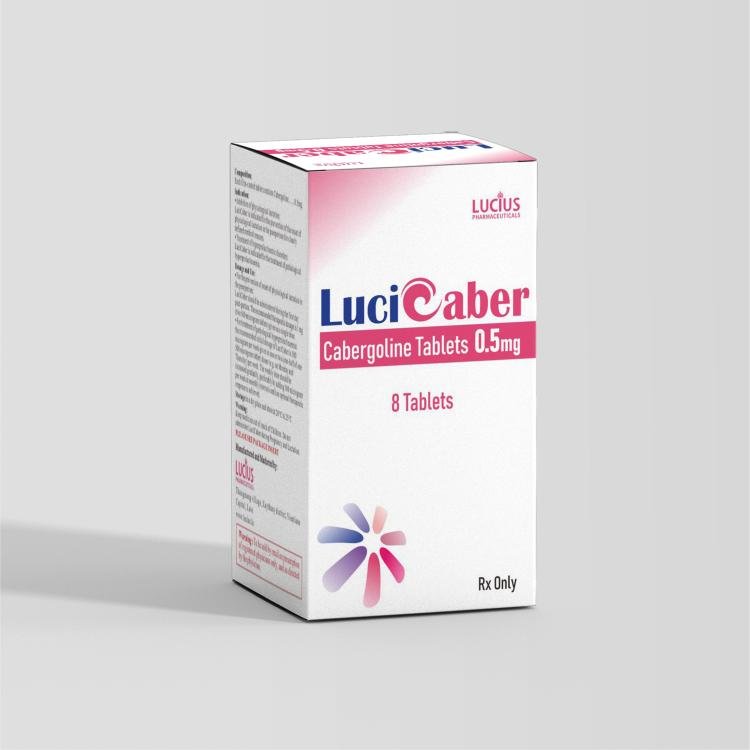
- Product name: LuciCaber Cabergoline 0.5mg
- Manufacturer / brand: Laos Lucius Pharma
- Active ingredient: Cabergoline
- Current strength: 0.5mg
- SKU: LU-ITEM-3
- Site category: other cancer
Product Summary
LuciCaber Cabergoline 0.5mg is an AISTIKA-listed product supplied by Laos Lucius Pharma. This page summarizes the product identity, strength, SKU, site category, and public medical reference information. Product name, manufacturer, packaging, and strength follow this AISTIKA product page.
Active Ingredient and Reference Data
Cabergoline is the active ingredient used for this product page. Public prescribing information for Cabergoline was used for the medical reference sections. Medical details are provided for reference and must be interpreted by a qualified healthcare professional.
Mechanism of Action
The secretion of prolactin by the anterior pituitary is mainly under hypothalamic inhibitory control, likely exerted through release of dopamine by tuberoinfundibular neurons. Cabergoline is a long-acting dopamine receptor agonist with a high affinity for D 2 receptors. Results of in vitro studies demonstrate that Cabergoline exerts a direct inhibitory effect on the secretion of prolactin by rat pituitary lactotrophs. Cabergoline decreased serum prolactin levels in reserpinized rats.
Reference Indications
Cabergoline Tablets, USP are indicated for the treatment of hyperprolactinemic disorders, either idiopathic or due to pituitary adenomas.
Reference Dosage and Administration
Recommended dosage of Cabergoline Tablets, USP for initiation of therapy is 0.
Dose conversion must be confirmed by a physician because the reference dose may vary by indication, organ function, toxicity, or interacting medicines.
This reference dosage is not an individualized prescription. Dose changes, treatment interruptions, or discontinuation must be directed by a physician.
Important Safety Information
Pregnancy: Dopamine agonists in general should not be used in patients with pregnancy-induced hypertension, for example, preeclampsia, eclampsia, and postpartum hypertension, unless the potential benefit is judged to outweigh the possible risk. Fibrotic Complications: a. Cardiac Valvulopathy: All patients should undergo a cardiovascular evaluation, including echocardiogram to assess the potential presence of valvular disease. If valvular disease is detected, the patient should not be treated with Cabergoline (See ) . Post-marketing cases of cardiac valvulopathy have been reported in patients receiving Cabergoline. These cases have generally occurred during administration of high doses of Cabergoline (>2mg/day) used for the treatment of Parkinson’s disease.
Common Adverse Reactions and Monitoring
The safety of Cabergoline Tablets has been evaluated in more than 900 patients with hyperprolactinemic disorders. Most adverse events were mild or moderate in severity. Doses were halved during the first week. Since a possible dose-related effect was observed for nausea only, the four Cabergoline treatment groups have been combined. The incidence of the most common adverse events during the placebo-controlled study is presented in the following table.
Drug Interactions and Special Populations
Drug Interactions: Cabergoline should not be administered concurrently with D 2 -antagonists, such as phenothiazines, butyrophenones, thioxanthenes, or metoclopramide.
Storage and Purchase Notes
Store according to the package or pharmacist instructions and keep out of reach of children. Before ordering, confirm product name, strength, quantity, price, shipping details, and payment method. After receipt, check packaging, batch number, expiration date, and storage conditions.
Sources
Sources: Cabergoline public prescribing information; openFDA/DailyMed public label data. These sources are used for public medical reference. Product information follows this AISTIKA product page.
DisclaimerProduct details, availability, pricing, and checkout information can change. Please review this product page carefully and consult a qualified healthcare professional before using any medicine.

Reviews
There are no reviews yet.