Product Details
Product Information
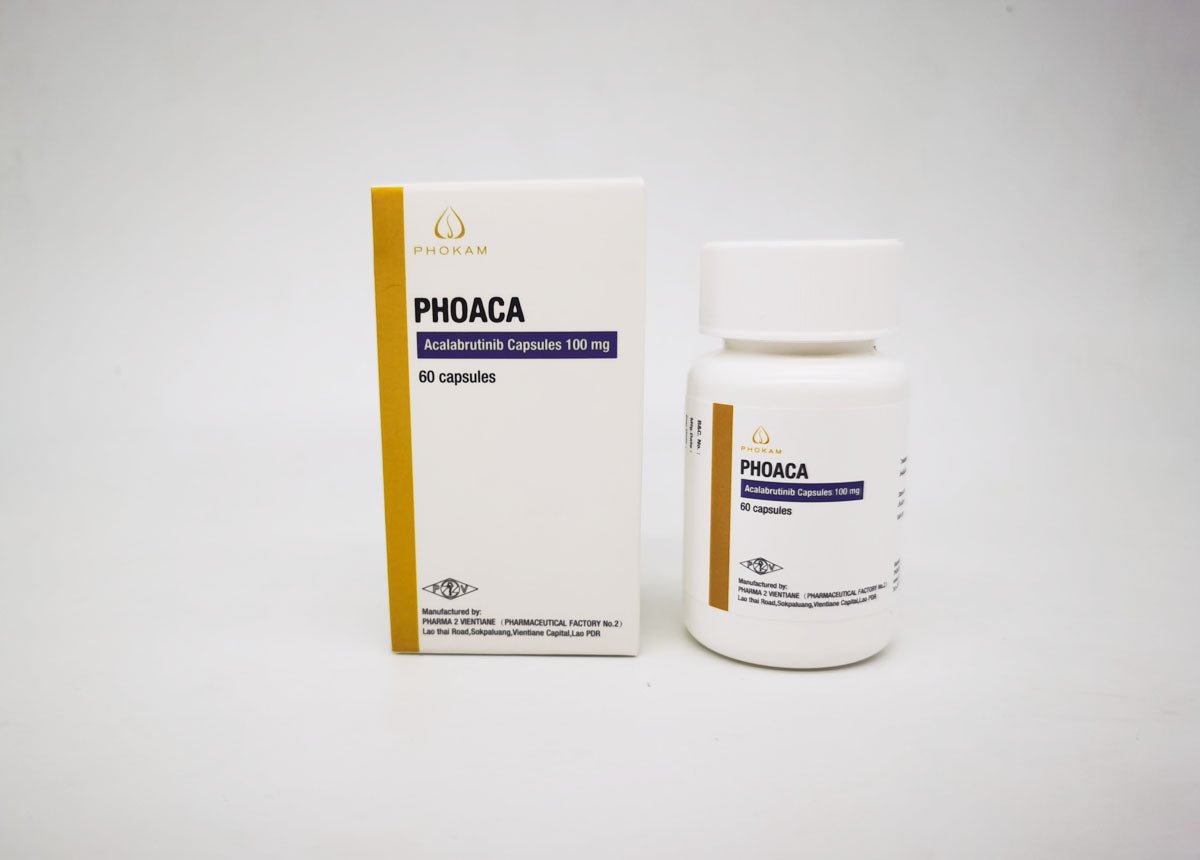
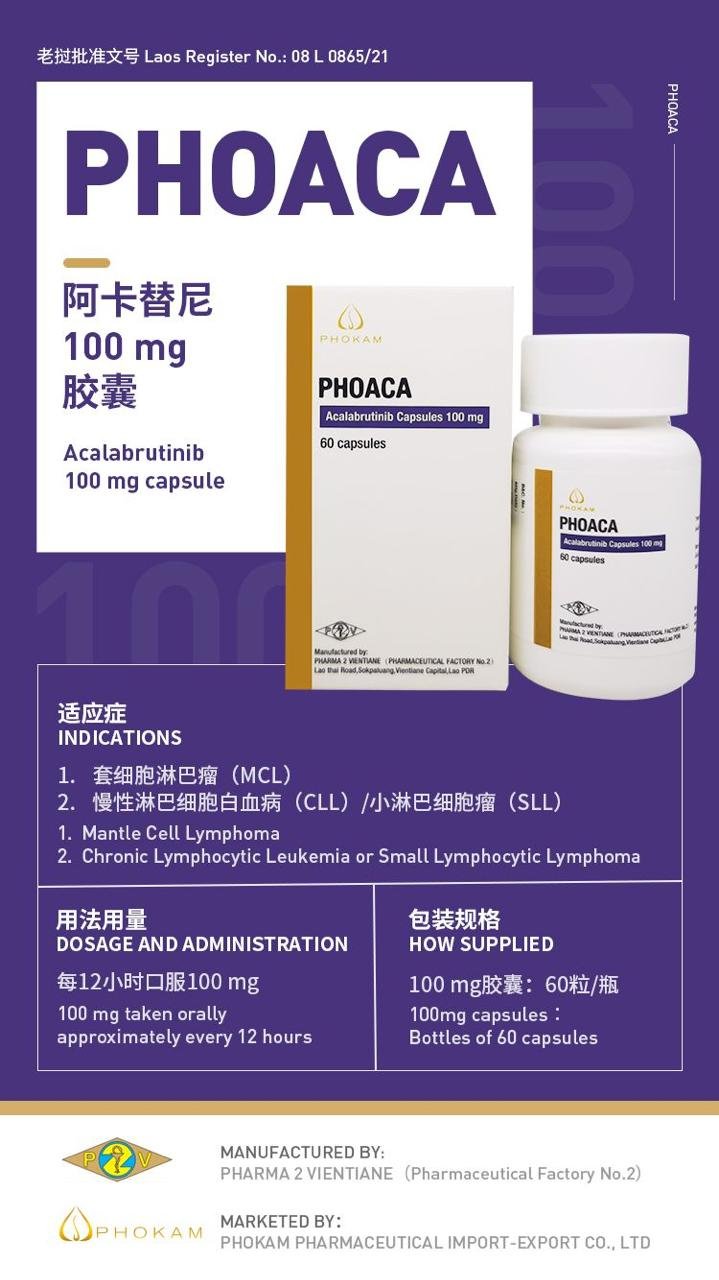
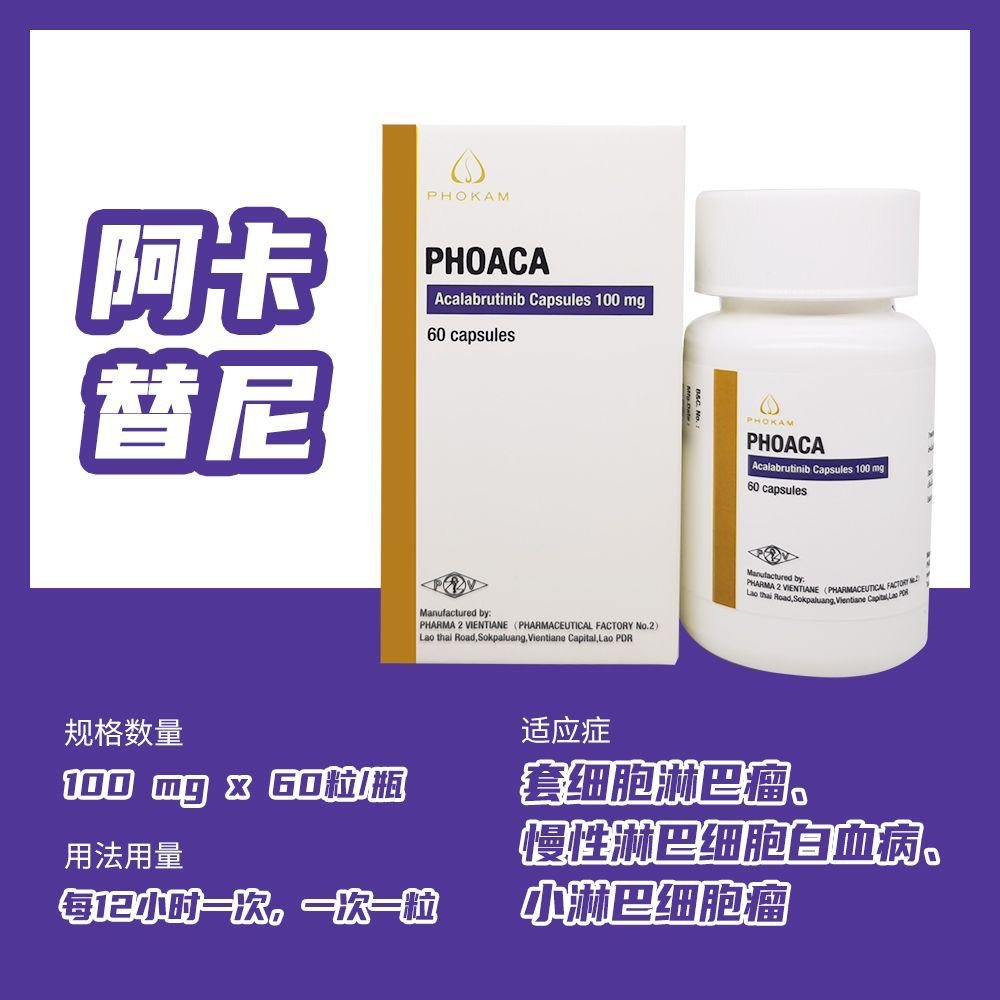
- Product name: PHOACA Acalabrutinib as shown on package
- Manufacturer / brand: Laos State Pharmaceutical No.2
- Active ingredient: Acalabrutinib
- Current strength: as shown on package
- SKU: L2-ITEM-9
- Site category: chronic lymphocytic leukemia (CLL), general medicines, lymphoma
Product Summary
PHOACA Acalabrutinib as shown on package is an AISTIKA-listed product supplied by Laos State Pharmaceutical No.2. This page summarizes the product identity, strength, SKU, site category, and public medical reference information. Product name, manufacturer, packaging, and strength follow this AISTIKA product page.
Active Ingredient and Reference Data
Acalabrutinib is the active ingredient used for this product page. Public prescribing information for Acalabrutinib was used for the medical reference sections. Medical details are provided for reference and must be interpreted by a qualified healthcare professional.
Mechanism of Action
Acalabrutinib is a small-molecule inhibitor of Bruton tyrosine kinase (BTK). Acalabrutinib and its active metabolite, ACP-5862, form a covalent bond with a cysteine residue in the BTK active site, leading to inhibition of BTK enzymatic activity. BTK is a signaling molecule of the B cell antigen receptor (BCR) and cytokine receptor pathways.
Reference Indications
Acalabrutinib is a kinase inhibitor indicated: In combination with bendamustine and rituximab for the treatment of adult patients with previously untreated mantle cell lymphoma (MCL) who are ineligible for autologous hematopoietic stem cell transplantation (HSCT).
Reference Dosage and Administration
Recommended dose is 100 mg orally approximately every 12 hours; swallow whole with water and with or without food.
Dose conversion must be confirmed by a physician because the reference dose may vary by indication, organ function, toxicity, or interacting medicines.
This reference dosage is not an individualized prescription. Dose changes, treatment interruptions, or discontinuation must be directed by a physician.
Important Safety Information
Serious and Opportunistic Infections: Monitor for signs and symptoms of infection and treat promptly. Hemorrhage: Monitor for bleeding and manage appropriately. Cytopenias: Monitor complete blood counts regularly. Second Primary Malignancies: Other malignancies have occurred, including skin cancers and other solid tumors. Advise patients to use sun protection. Cardiac Arrhythmias: Monitor for symptoms of arrhythmias and manage. Hepatotoxicity, Including Drug Induced Liver Injury: Monitor hepatic function throughout treatment. Serious or Grade 3 or higher infections (bacterial, viral, or fungal) occurred in 29% of 2,055 patients exposed to Acalabrutinib in clinical trials, most often due to respiratory tract infections (18% of all patients, including pneumonia in 14%) .
Common Adverse Reactions and Monitoring
The most common Grade 3 or 4 laboratory abnormalities (≥ 10%) are absolute neutrophil count decreased, uric acid increased, absolute lymphocyte count decreased, and platelets decreased. Treatment includes Acalabrutinib monotherapy in 1258 patients in 9 trials, and Acalabrutinib combinations in 797 patients in 4 trials. Among these recipients of Acalabrutinib, 89% were exposed for at least 6 months and 82% were exposed for at least one year. The most common Grade 3 or 4 laboratory abnormalities (≥ 10%) were absolute neutrophil count decreased (32%), uric acid increased (27%), absolute lymphocyte count decreased (21%) and platelets decreased (10%).
Drug Interactions and Special Populations
Strong CYP3A Inhibitors : Avoid co-administration with Acalabrutinib. ( 2.2 , 7 ) Moderate CYP3A Inhibitors : Reduce the dosage of Acalabrutinib. ( 2.2 , 7 ) Strong CYP3A Inducers : Avoid co-administration with Acalabrutinib. If co-administration is unavoidable, increase the dosage of Acalabrutinib. ( 2.2 , 7 ) 7.1 Effect of Other Drugs on Acalabrutinib Strong CYP3A Inhibitors Clinical Effect Co-administration of Acalabrutinib with a strong CYP3A inhibitor increased acalabrutinib plasma concentrations . Increased acalabrutinib concentrations may result in increased toxicity. Prevention or Management Avoid co-administration of Acalabrutinib with strong CYP3A inhibitors. Alternatively, if the inhibitor will be used short-term, interrupt Acalabrutinib .
Storage and Purchase Notes
Store according to the package or pharmacist instructions and keep out of reach of children. Before ordering, confirm product name, strength, quantity, price, shipping details, and payment method. After receipt, check packaging, batch number, expiration date, and storage conditions.
Sources
Sources: CALQUENCE public prescribing information; openFDA/DailyMed public label data. These sources are used for public medical reference. Product information follows this AISTIKA product page.
DisclaimerProduct details, availability, pricing, and checkout information can change. Please review this product page carefully and consult a qualified healthcare professional before using any medicine.
Reviews
There are no reviews yet.